

How often should a roof be inspected?
Once or twice a year for a house, plus after any storm that dropped hail or ran sustained high wind over it. Commercial and low-slope roofs want twice a year as a minimum. The interval is not a sales rhythm: it is roughly how long a small failed detail, a split pipe boot or a lifted flashing, takes to turn into wet decking, and a roof inspected on that cycle tends to reach the top of its rated life rather than the bottom.
Spring after the hail, autumn before the rain
In North Texas the two useful slots pick themselves. Spring, once the severe season has passed, is when you find out what the year did to the roof. Autumn, before the long winter rains, is when you fix it while the weather still allows.
A third visit is worth it in any year a named storm or a significant hail cell crossed the area, and that inspection should happen within weeks rather than months, because carriers work to a date of loss and the trail goes cold.
What a real inspection covers
The field of the roof, for granule loss, bruising, cracked or curling shingles and wind creasing. Ridges and hips, which take the most weather. Every valley, for debris and for the condition of the metal beneath it.
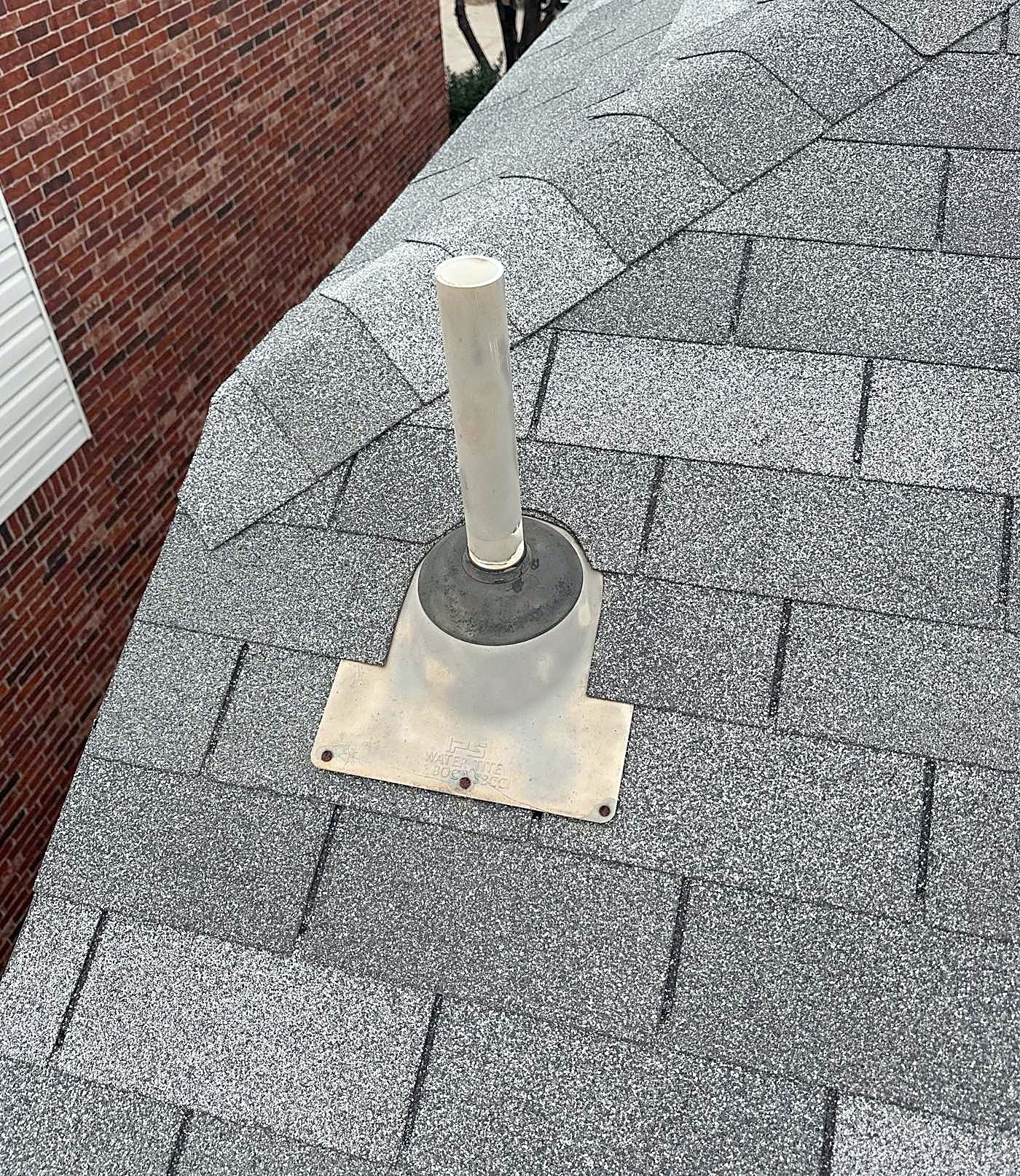
Then the penetrations, which is where most leaks actually start: pipe boots, vents, skylights, chimneys, sidewall and step flashing, and anything anyone has screwed through the roof to mount a satellite dish or a solar panel.
Then the edges: drip edge, fascia, and the gutters that sit against them. And where there is safe access, the attic, because a decking stain, daylight at a nail, or damp insulation says more about a roof than the surface will admit to.
Finally the ventilation balance, intake at the soffits against exhaust at the ridge, because an attic that runs hot ages a roof from underneath regardless of what the weather does to the top of it.
The other times a roof needs looking at
Before you buy a house. A general home inspector reports what is visible and is not a roofer; a roofing inspection tells you how many years are left and what the repair list costs, which is the number that matters while the contract is still negotiable.
Before you list one. Finding out about the roof at the buyer’s inspection is finding out at the worst possible moment, with a closing date already set and no leverage left.
When the roof passes fifteen years. Asphalt does not fail gradually across the whole surface; it reaches an age where the details start going one after another, and the point of an inspection then is to plan the replacement rather than be surprised by it.
Related questions
Does an inspection cost anything?
Ours do not, and there is no charge when the finding is that nothing needs doing. Some companies charge for a formal written report intended for a real-estate transaction; ask which you are getting.
Will an inspection damage my roof?
A careful one will not. Walking a hot asphalt roof in the middle of a Texas afternoon can scuff granules, which is one reason inspections tend to happen in the morning, and very brittle or steep roofs get flown rather than walked.
How long does it take?
Most houses take under an hour, longer where the attic is worth a look or the roof is complicated.