

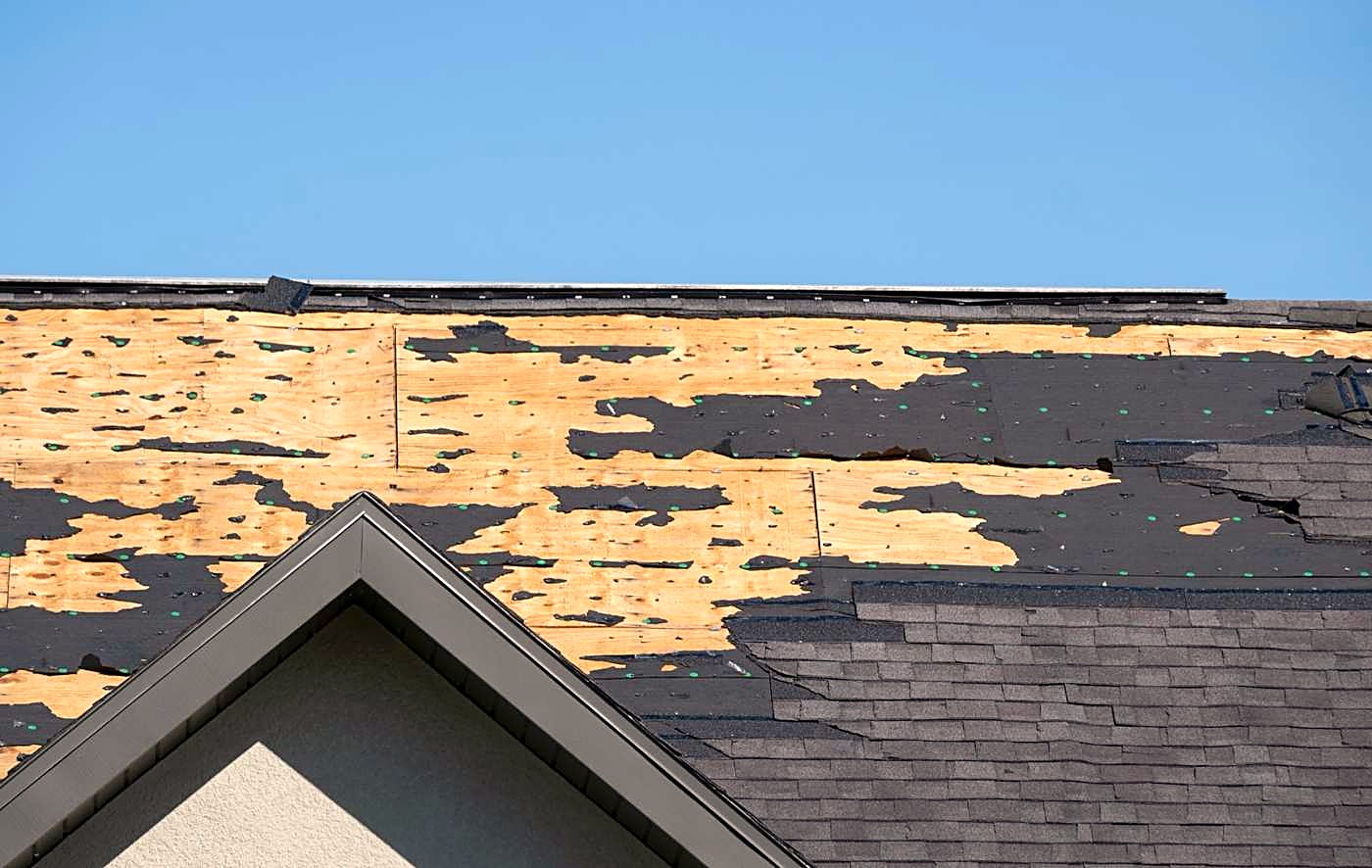
How do I know if hail damaged my roof?
Mostly you cannot tell from the ground, which is the whole problem. Functional hail damage on an asphalt shingle is a bruise: the granules are knocked off and the mat underneath is fractured, and it looks like a dark circle a couple of centimeters across. From the driveway that is invisible. What you can check is the collateral, because hail that damaged the roof almost always leaves marks on softer metal first.
Check the soft metal before you look at the roof
Hail hits everything, and the things that dent most readily are the things worth checking from the ground. Gutters and downspouts, the gutter apron, window screens, the soft aluminum fins on the outside unit of the air conditioning, the mailbox, a metal shed, the top rails of a fence, and the painted surfaces of the car if it was out.
Those surfaces tell you the stone size and whether it was travelling hard enough to matter. A yard full of dented soft metal and a roof with no marks on it is unusual; the reverse, a roof full of bruises and nothing else touched, is close to impossible.
The gutters are also where the evidence of a bad hit collects. A heavy scatter of granules in the downspout splash after a storm is different from the normal shedding a roof does over years, and it is worth photographing on the day.
What a roofer is actually looking for up there
On an asphalt roof, a functional hit is a soft spot: press it and it gives slightly, because the fiberglass mat behind the granules has cracked. It is usually random in placement, unlike blistering or manufacturing defects, which follow a pattern.
The other findings are just as important. Creased shingle tabs from wind uplift, which fail later even where the granules survived. Dented ridge and hip caps, which take the worst of it because they sit highest. Damaged pipe boots, turbine vents and flashing, all of which leak long before the field does.
Direction matters too. Wind-driven hail hits one or two elevations hardest, so a roof can be badly damaged on the north and west slopes and untouched on the south. A report that only covers one slope has not looked at the roof.
Damage now, leak later
This is the part that catches people out. A bruised shingle does not leak on the day. The mat is fractured but the covering is still in place, so the roof performs normally through the next several rains. What happens over the following months is that the exposed asphalt at the bruise weathers, cracks open, and lets water into the decking.
That delay is why so many hail claims are filed too late. The storm was in April and the ceiling stained in November, and by then the connection to a specific date of loss is harder to make and the carrier’s reporting window may have closed.
The practical rule: if a hail-bearing cell went over your neighborhood, get the roof looked at that month, not when something goes wrong.
Before you call anybody
Write down the date of the storm. Photograph the dented gutters, screens and air conditioner fins, and the granules in the downspout splash. If hail fell while you were home, note roughly what size it was against something ordinary, a coin or a golf ball.
Then get someone on the roof, and take the photographs they produce whether or not you file. A dated set of images of your roof is worth having even in the years nothing happens, because the next claim will turn on what the roof looked like before.
Related questions
How big does hail have to be to damage shingles?
Roughly an inch across is the usual threshold for functional damage on asphalt, though an older or more brittle roof can be damaged by smaller stones, and wind speed matters as much as size.
Can I climb up and check it myself?
We would rather you did not. A roof is a fall risk, walking a hot asphalt roof can damage it further, and telling hail bruising apart from blistering or normal granule loss takes some practice.
My neighbor is getting a new roof. Does that mean I need one?
It means a cell went over the street and it is worth an inspection. It does not mean your roof took the same hit, because hail falls in narrow swaths and elevation and roof age both change the outcome.